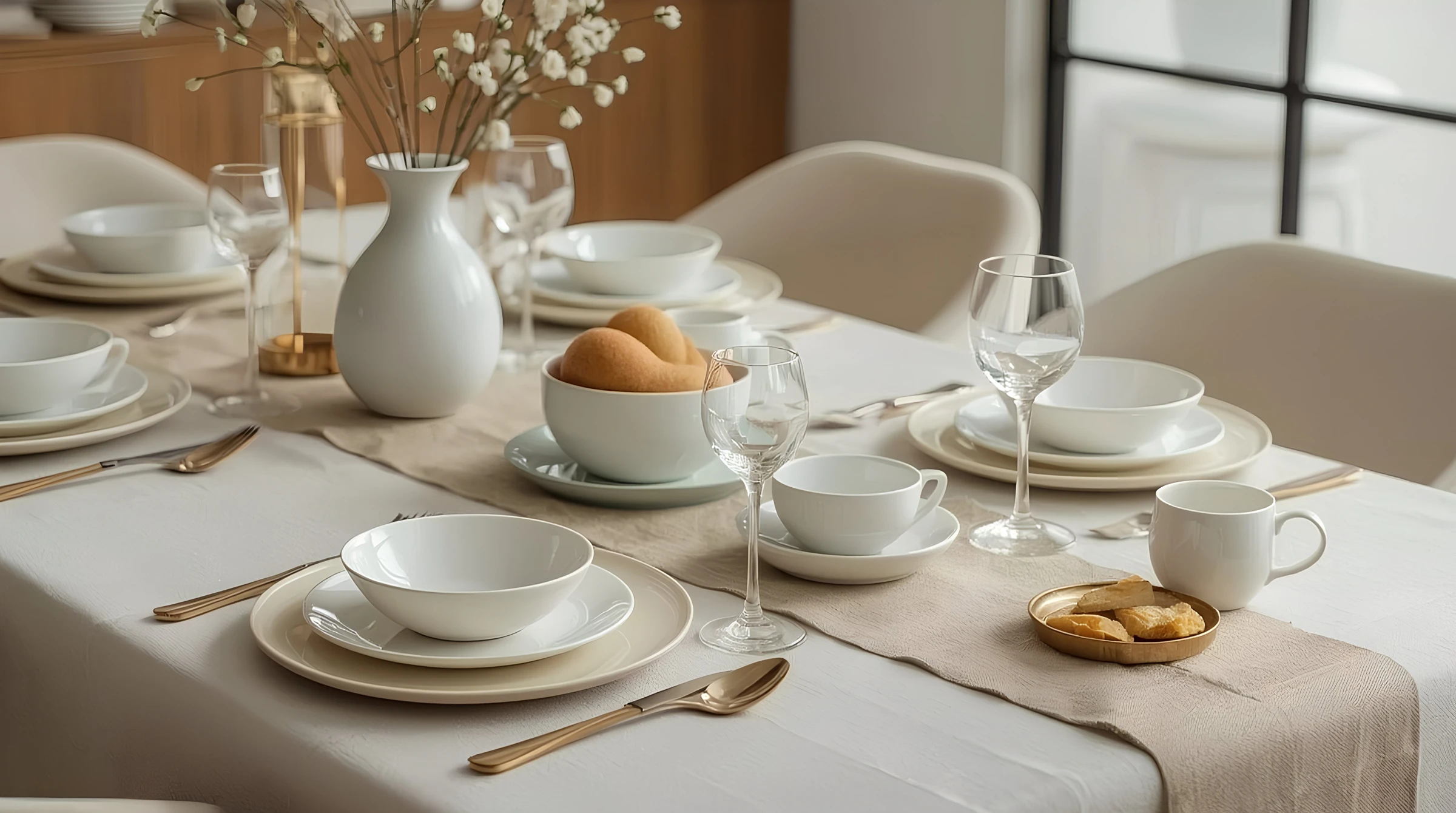
Rim or Coupe? Choosing Plate Shapes and Sizes for Your Restaurant
How plate shape and size change the way food looks, and how to choose the right set for your menu.
VagoShop Editorial Team
HoReCa equipment specialists, Istanbul
2 min read
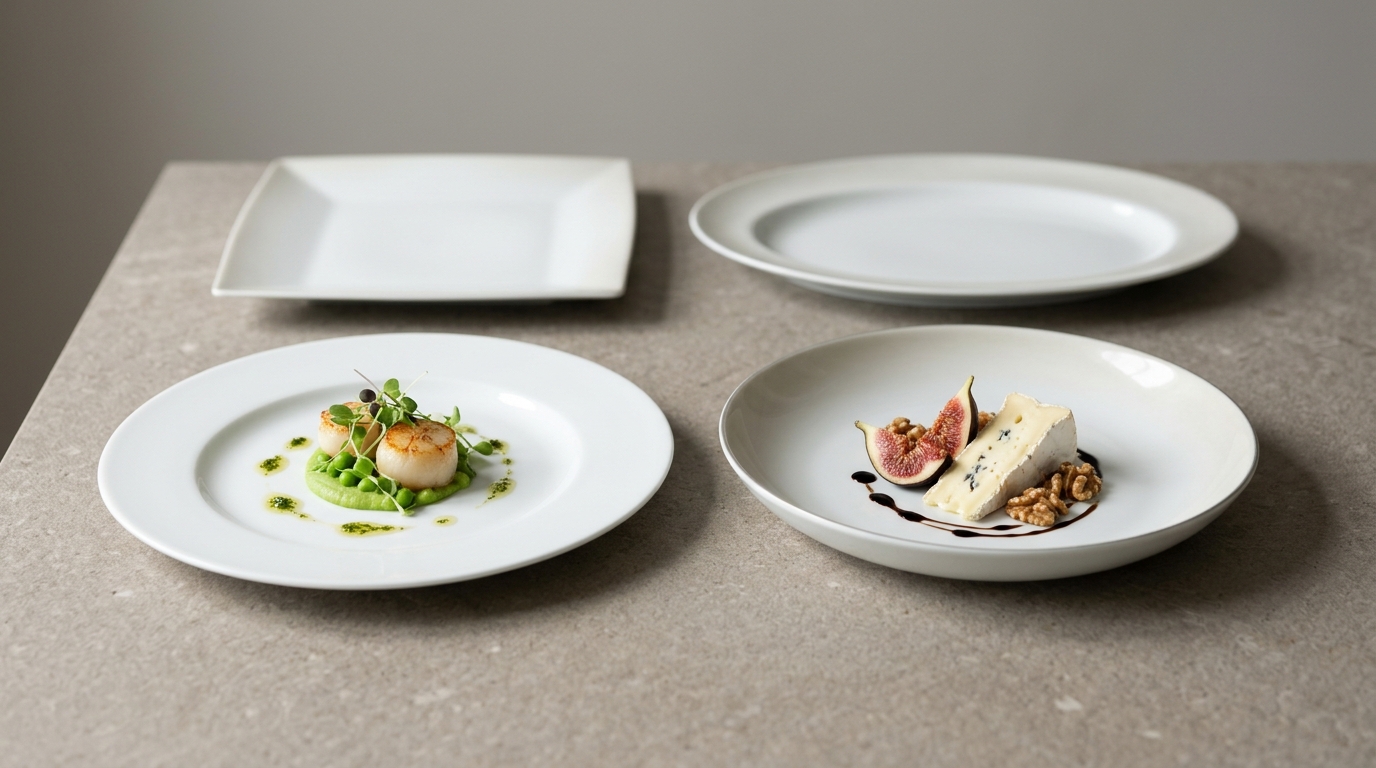
In short: rim plates frame the food and suit formal service; coupe plates hold larger portions and stack compactly; square, rectangular and oval shapes add interest for starters, desserts and sharing. Always check the exact diameter, because sizes differ between collections.
The plate is the frame of every dish. The right shape makes portions look generous and plating easy; the wrong one makes food look lost or crowded. These are the main choices.
Rim plates
A rim plate has a flat border around the centre.
- The rim frames the food and gives the server a clean place to hold the plate.
- The usable space is smaller than the plate's full size, so food looks more refined.
- A classic choice for hotels, banquets and fine dining.
Coupe plates
A coupe plate has no rim: it curves gently up from the centre.
- More usable surface, so the same plate holds a larger portion.
- A modern, relaxed look that suits bistros and sharing menus.
- Stacks compactly, which helps busy kitchens.
Deep plates and bowls
Deep plates hold pasta, risotto and dishes with sauce; a wide rim keeps the edge clean. For soups and salads, see the bowl ranges in Crockery.
Square, rectangular and oval
- Square and rectangular plates suit starters, desserts and plated tasting menus.
- Oval platters are ideal for fish and for sharing in the middle of the table.
- Boat-shaped plates add interest for small bites and sides.
Sizes by course
- Bread and side plates: small, beside the main plate.
- Starters and desserts: medium plates.
- Mains: large dinner plates; very large plates suit chef-style plating with space around the food.
- Chargers sit under the dinner plate for formal service.
Check the exact diameter on each product page before you order: sizes differ between collections.
Rim or coupe: which to choose
- Choose rim plates when service is formal, portions are refined, or waiters carry several plates at once.
- Choose coupe plates for generous portions, sharing menus and kitchens with little storage space.
- Many restaurants mix both: coupe plates for mains and rim plates for starters or desserts.
Practical points
- Choose plates that fit your dishwasher racks and shelves.
- Keep a single style across courses for a calm look, or mix one accent shape for interest.
- Order spares: plates are the pieces that break most.
Choosing the material as well? Read our guide on porcelain vs stoneware.
Build your set: browse Plates by shape and size, and send us your list for a project quote.
Quick answers
Frequently asked questions
What is the difference between a rim plate and a coupe plate?
Which plate shape holds a larger portion?
What is a charger plate used for?
How many spare plates should a restaurant keep?
Wholesale only
Planning an order for your hotel or restaurant?
Send us your cover count and room types. Our team replies with sizes, quantities and a quote from our factories.